Participants can choose two workshops (1 in the morning and 1 in the afternoon) from a total of 8 available options.
This dynamic workshop series offers diverse, in-depth learning opportunities for family therapists, counsellors, practitioners, researchers and students engaged in Systemic Family Therapy.
Spanning theoretical, methodological, and applied topics, the workshops explore innovative approaches to participation, qualitative inquiry, randomized trials, therapist effectiveness, and culturally grounded therapeutic models.
Sessions range from reflections on decades of clinical experience to data-driven evaluations of emerging practices across global contexts.
Whether you’re new to family therapy or looking to deepen your expertise, this series supports critical thinking and practical systemic application in real-world settings.
Relational Integration of the Personal and Professional in Therapy and Supervision
Speaker:
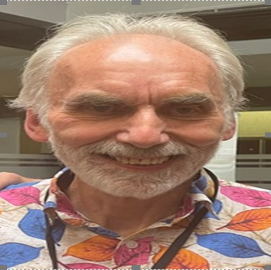
Trainer John Burnham,
Systemic Psychotherapist, Trainer and Supervisor
Parkview Clinic, Birmingham Children’s Hospital
This workshop will explore and extend a range of practices intended to develop a reciprocal relationship between the personal and professional in which each aspect becomes a living resource to the other. Professional development can enhance one’s personal life and one’s personal life can extend one’s professional practice. Therapists, Supervisors and supervisees will be invited to consider how their own significant relational patterns (current and historical) can be both a resource and restraint in their therapeutic/supervisory practice. The coordinated management of meaning will be proposed and demonstrated as a practical way of integrating this concept into your own practice. All professionals who are interested in continuing to develop and extend their practice and looking to explore the relationship between their personal and professional restraints and resources.
21st Century Couple and Family Therapy
Speakers:
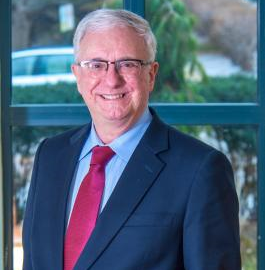
Dr Jay Lebow,
Clinical Professor
The Family Institute at Northwestern
This workshop will survey present practice of couple and family therapy and emerging important issues in practice. Topics will include prominent models in practice, the emergence of couple therapy with distinct methods of practice, the empirical foundation for couple and family therapy, the role of theory in relation to practice, transcendent transtheoretical factors, shared strategies of change, integrative practice, the importance of cultural context in couple and family therapy, and developments related to emerging technologies.
Beyond Psychotherapy, Interventions in Extended Systems
Speaker:
Dr Umberta Telfener,
President
European Family Therapy Association
A consultation to a Hospital patient, an outpatient interview, a support intervention, the design of an integrated parenting-support project, a counselling to a migrant group are among what we do as Mental Health professionals. The workshop seeks to actively reflect with the participants on how to move, where the easiest points of entry lie, what the most frequent traps are, which errors to try to avoid and which practices to privilege instead.
Short-term Structural Family Therapy with Couples
Speaker:
Dr Wong Oi Ling,
Professor
Hong Kong Polytechnic University
This 3.5-hour presentation aims to equip participants with knowledge and skills for working with Asian couples who have young children experiencing behavioural or emotional challenges. The session will cover various theories, including systems concepts, couple development, and cultural and gender issues. Techniques for family assessment will be demonstrated through vignettes from real cases.
How to Assess Relationship of Asian couples with a Culturally Sensitive Model
Speaker:
Dr Wen Tao Chao, Professor National Taipei University of Education, Taiwan
Asian couples share similarities with those globally, making existing relationship theories useful. However, unique cultural dynamics—such as filial piety and extended family influences—are often overlooked, creating a gap in culturally relevant frameworks. The Manor Model was developed to address this gap, drawing from clinical work with Taiwanese couples and integrating established theories (e.g., Gottman’s Sound Relationship Model) with broader relational systems common in Asian contexts. This workshop introduces the model and its application as a practical assessment and intervention tool. While rooted in Taiwanese cases, it may be adapted for other Asian populations and inspire culturally responsive approaches in diverse settings.
Contextualizing Wider Social Networks in our Therapy Sessions
Speaker:
Dr Dan and Dr Sally,
Professor Emeritus and Professor Emerita
University of Calgary
In this workshop we will very explicitly and specifically show the importance and relevance of extending family therapy to the socially contextual situations in which they are immersed and ways to conduct our own research on our work with families. We will provide many examples for ways to conduct these conversations with client families as well how to study them without losing context.
Enactment – The Use of an Experiential In-session Method in Couple and Family Therapy in Singapore
Speaker:
Mr Tony Ong,
Clinical Director
Counselling and Care Centre
In systemic psychotherapy with couples and families, the practitioner attempts to have family members connect with one another towards healing and intimacy in their relationships. In his years of conducting training and providing consultations in Singapore, Tony has observed the limited use of enactment despite its supposed effectiveness in generating in-session change in relationships. As such, Tony examined and experimented with the use of enactment in Structural Family Therapy and Emotionally Focused Couple/Family Therapy. He hopes to inspire practitioners in Singapore to consider its use as an experiential in-session method to support couples and families in the change process.
Co-Creating ‘Fitting-Enough’ Supervisory Relationships Across Diverse Contexts
Speaker:
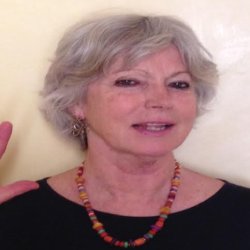
Mrs Sharon Sng,
Deputy Director
Counselling and Care Centre
This workshop offers participants a practical understanding of what makes supervisory relationships ‘fitting-enough’ across diverse professional contexts. Participants will discover the various systemic concepts that can be applied across diverse work settings, supervisory approaches, personal preferences, and developmental stages. We will examine the roles and practices in navigating the differences between supervisors and supervisees so that there is a balance between challenge and support in supervision. Participants will leave with practical strategies for developing collaborative, context-sensitive and safe supervisory relationships.